Travel medicine kit: what you should really pack.
Electrolyte powder, a medication list with the names of the active ingredients, and four weeks' lead time for vaccinations. Three things missing from most travel kits.
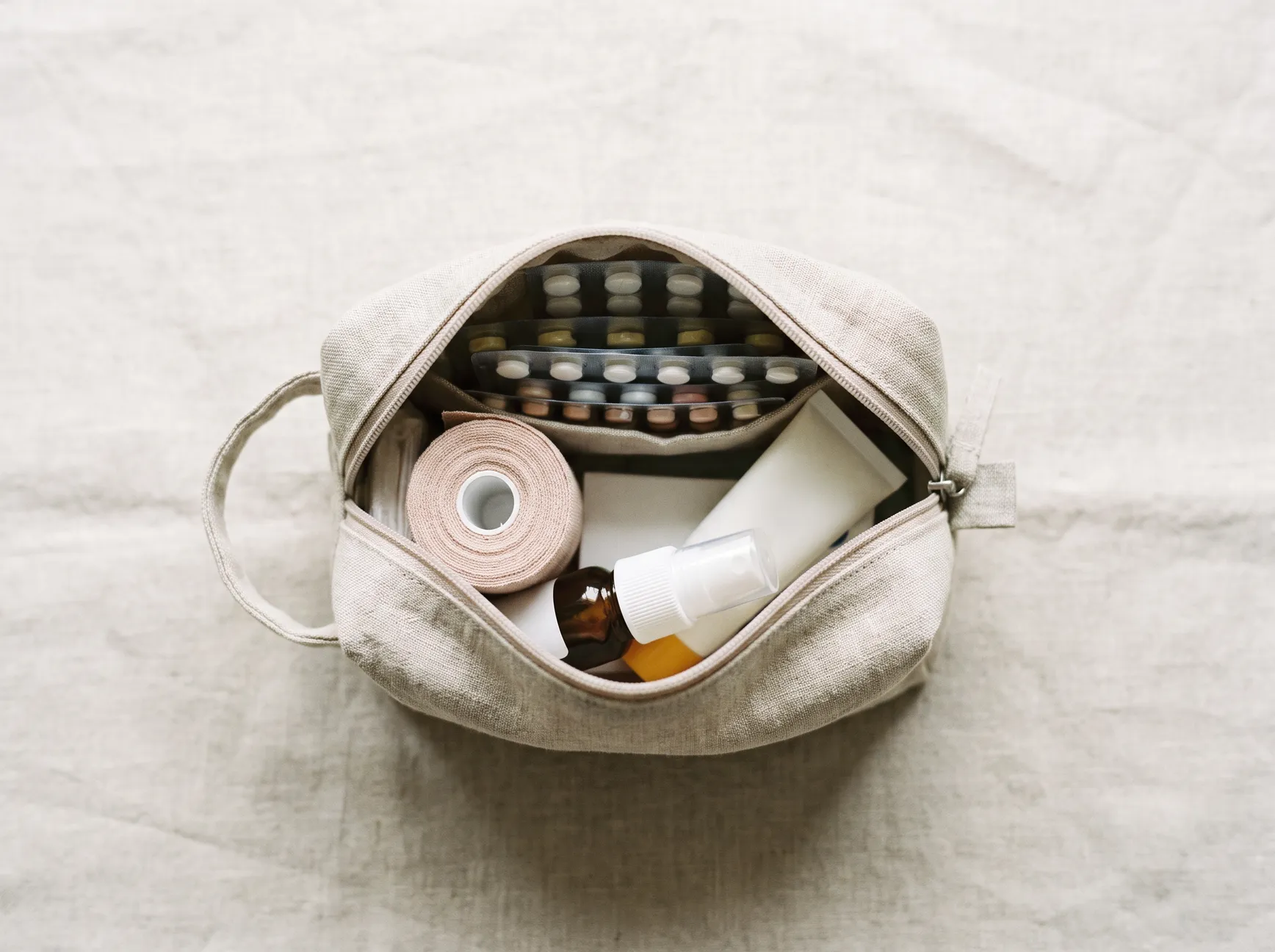
What belongs in every travel medicine kit?
These things belong in every travel medicine kit, whether you are going to Ticino or to Thailand:
- Painkillers and fever reducers, in the form you know and tolerate
- Something for diarrhoea and, more importantly, electrolyte powder to dissolve. With traveller’s diarrhoea the loss of fluid is the actual problem, not the diarrhoea itself.
- Something for nausea and travel sickness
- Wound care: plasters in several sizes, sterile compresses, wound disinfectant, an elastic bandage
- Something for insect bites and allergic reactions
- Sun protection with a high sun protection factor
- A thermometer, small and digital
- Tweezers, scissors, disposable gloves
And, usually forgotten: a small amount of whatever you take at home for your usual minor complaints. Anyone who always takes the same preparation for heartburn should not have to look for it in Barcelona.
Your own medication, and what goes wrong with it
This is where the mistakes happen that actually ruin a holiday.
Take more than you need. Count the days of the trip and add a week. Flights get cancelled, return journeys shift, luggage goes missing.
Long-term medication belongs in hand luggage. All of it, not split up. Checked luggage sometimes arrives later than you do, and it gets very cold in the hold.
Take a medication list with you, with the names of the active ingredients, not just the brand names. Brand names differ from country to country, active ingredient names do not. If you need medical help abroad, that list is worth its weight in gold. We will print it out for you.
For certain medicines you need a doctor’s certificate, for instance for strong painkillers, some sleeping pills and sedatives, or controlled substances. Some countries have strict import rules, including for preparations that are unremarkable here. Ask us in good time and we will look at it for your destination.
Worth knowing
Heat affects medicines more than people think. Suppositories melt, insulins and some eye drops do not tolerate high temperatures, and the glove compartment of a car in the sun easily exceeds sixty degrees. A cool bag rather than the glove compartment.
From the counter
Scissors and people’s own medication are missing from almost every bag we go through here.
What comes on top depending on the destination
From here on it becomes individual, and from here on a conversation is worthwhile.
Sun and heat: a higher sun protection factor, after-sun, enough electrolytes.
The tropics and subtropics: an effective insect repellent, impregnated clothing if appropriate, a mosquito net. On malaria prevention we advise you and tell you when a doctor’s prescription is needed.
Mountains and altitude: sun protection with a high factor, lip care with UV protection, blister plasters.
Long-haul travel with time differences: if you take medication to a fixed schedule, we will work out beforehand how to manage it across the time change. With some preparations that matters, with most it does not.
Travelling with children: child-appropriate dosages, fever medicine as a syrup or suppository, and a thermometer that measures quickly. We work out the dosages by weight so that you do not have to convert anything on the way – more on the travel kit for families.
Vaccinations are a subject of their own, and the most common mistake with them is the timing. Hepatitis A and B need several doses over weeks. Plan the consultation four to six weeks before departure, not in the week beforehand. More under vaccinations.
What do you have to bear in mind in hand luggage?
Liquids in hand luggage are limited to containers of up to 100 millilitres, together in a transparent one-litre bag. Medicines are exempt from this rule if you need them during the flight. Carry them separately and declare them at the checkpoint. A prescription or a doctor’s confirmation saves discussions, particularly with syringes, pens and liquid preparations.
Scissors and tweezers with pointed ends, on the other hand, belong in checked luggage.
How we put it together with you
Bring three things: your destination, the duration of the trip and your medication list. We need no more than that.
We go through what you take anyway, what is hard to get at the destination, what does not go well together and what you simply do not need. In the end you have a bag that is smaller than the one you would have packed yourself, and in which nothing important is missing.
We take our time for the consultation, in the separate room of the pharmacist consultation if you wish. And if something does happen while you are away and you would rather not change the dressing yourself after you get back, we will take that on in wound care.
Important
This article is general orientation and does not replace individual advice. Which preparations are suitable for you depends on your medication, your pre-existing conditions and your destination.
From the counter
I always pack beyond the length of the holiday, in case the journey home does not work out.
As of August 2026. Hand luggage rules according to the requirements of the Federal Office of Civil Aviation FOCA, vaccination recommendations according to the Swiss vaccination schedule of the Federal Office of Public Health. Import rules for medicines depend on the country; please check before travelling.
Managing director and qualified pharmacy technician, with further training in biochemistry according to Dr Schuessler and the Bach flower training of the Bach Centre. A training supervisor and examination expert – anyone who wants to do their apprenticeship with us is guided by her.
Professionally reviewed by our qualified pharmacists. This article does not replace a medical diagnosis.
Frequently asked questions about the travel medicine kit
How long before the trip should I come by?
For the travel medicine kit a week is enough. For vaccinations plan four to six weeks, because some need several doses.
Can I decant my medication into a pill box?
For travelling that is practical, but take the original packaging with you. At border controls and in the event of medical treatment abroad, the labelling is what counts.
What do I do if I lose medication abroad?
With the list of active ingredients you will get a replacement preparation in most countries. Without it, it becomes laborious. Photograph the list with your phone as well.
Do I even need a travel medicine kit for short city trips in Europe?
A small one. Your own medication, something for pain, plasters. In European cities you will get the rest on the spot; in a holiday house in the mountains at ten at night, rather not.
Does health insurance cover any of it?
Prescription preparations run as usual. The basic kit is something you pay for yourself. Where a cheaper version is just as good, we will tell you.
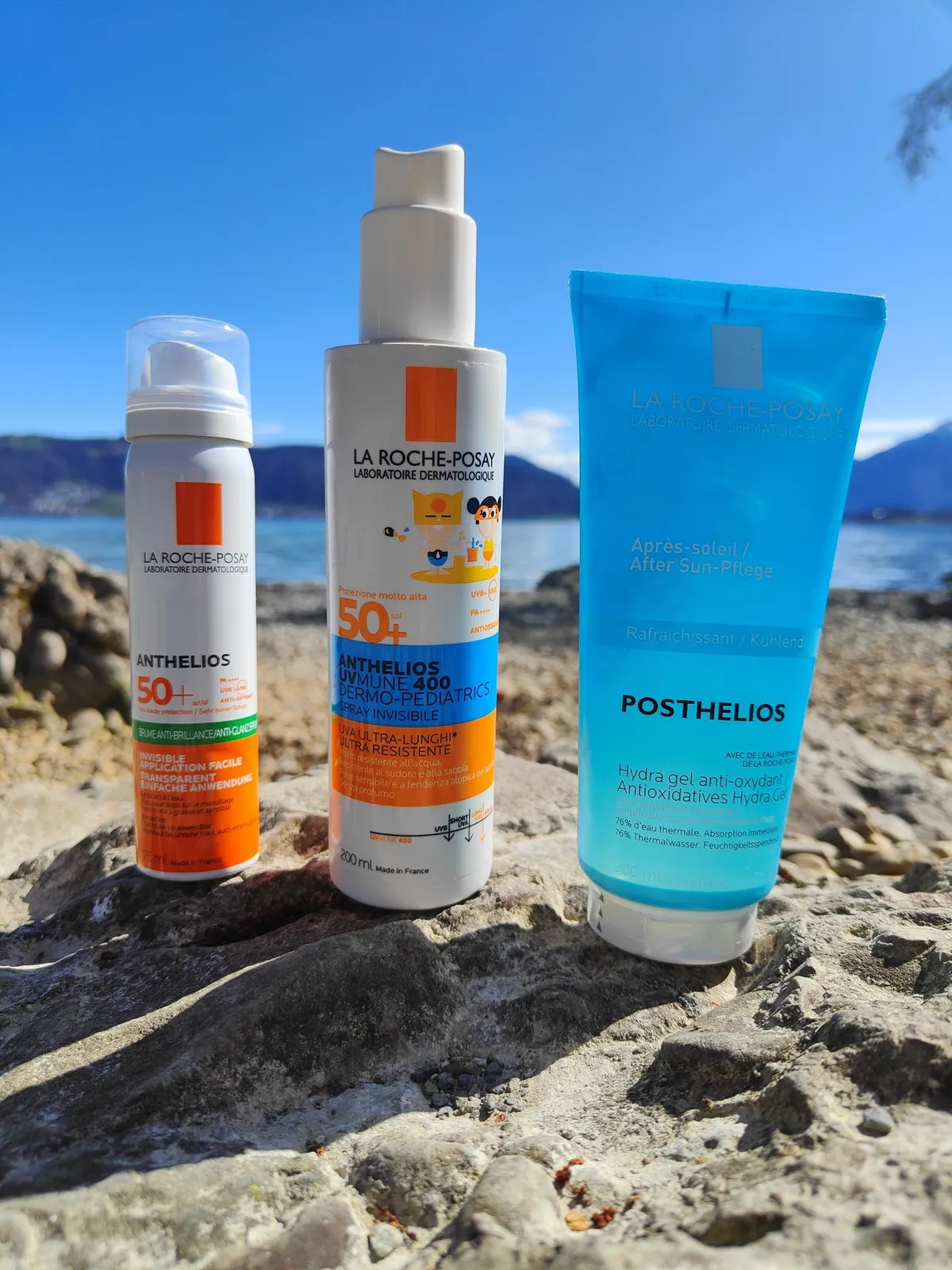
The factor on the bottle applies to an amount of cream that almost nobody puts on. That is why SPF 50 is rarely SPF 50 in everyday life.
Tamara Ringger · 8 min read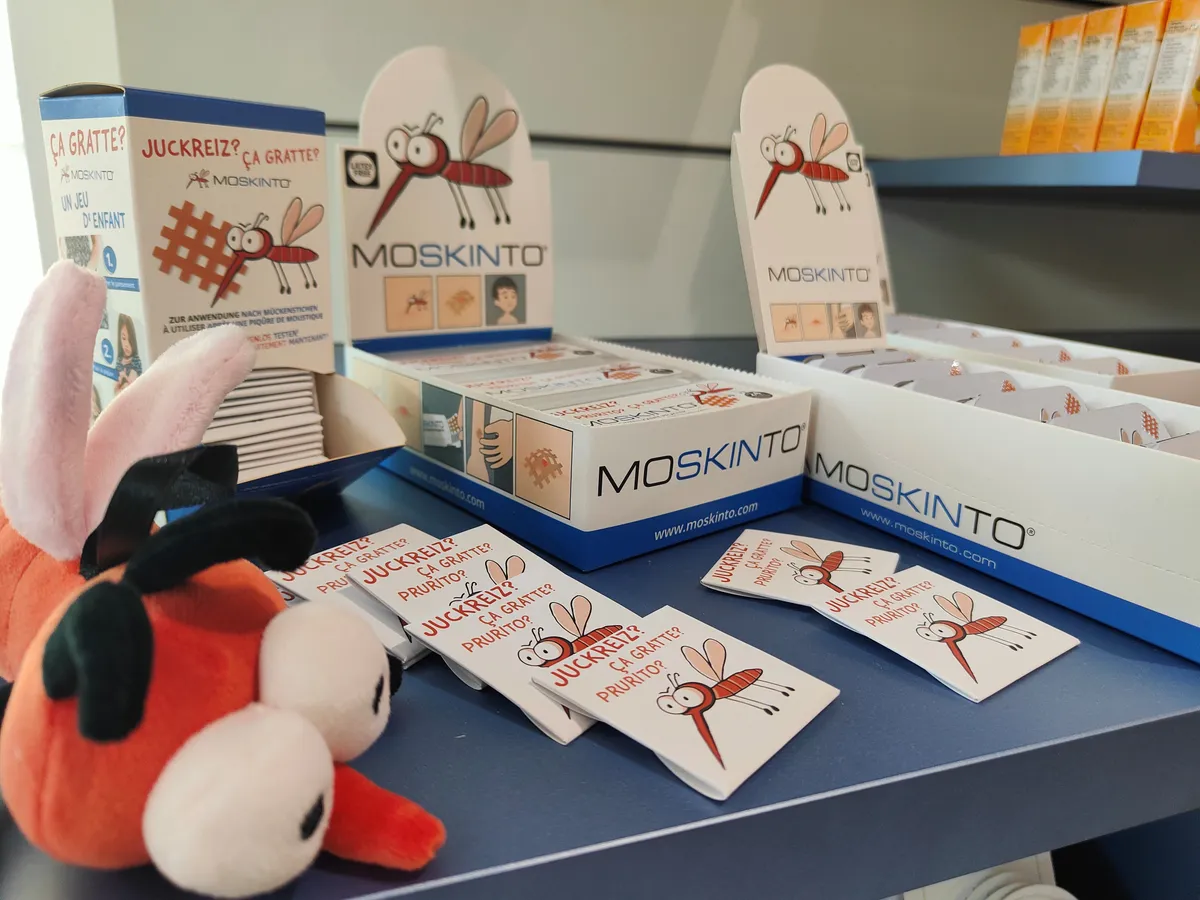
The canton of Zug is one of the TBE risk areas of Switzerland. What that means for trips into nature, and how to protect yourself.
Tamara Ringger · 6 min read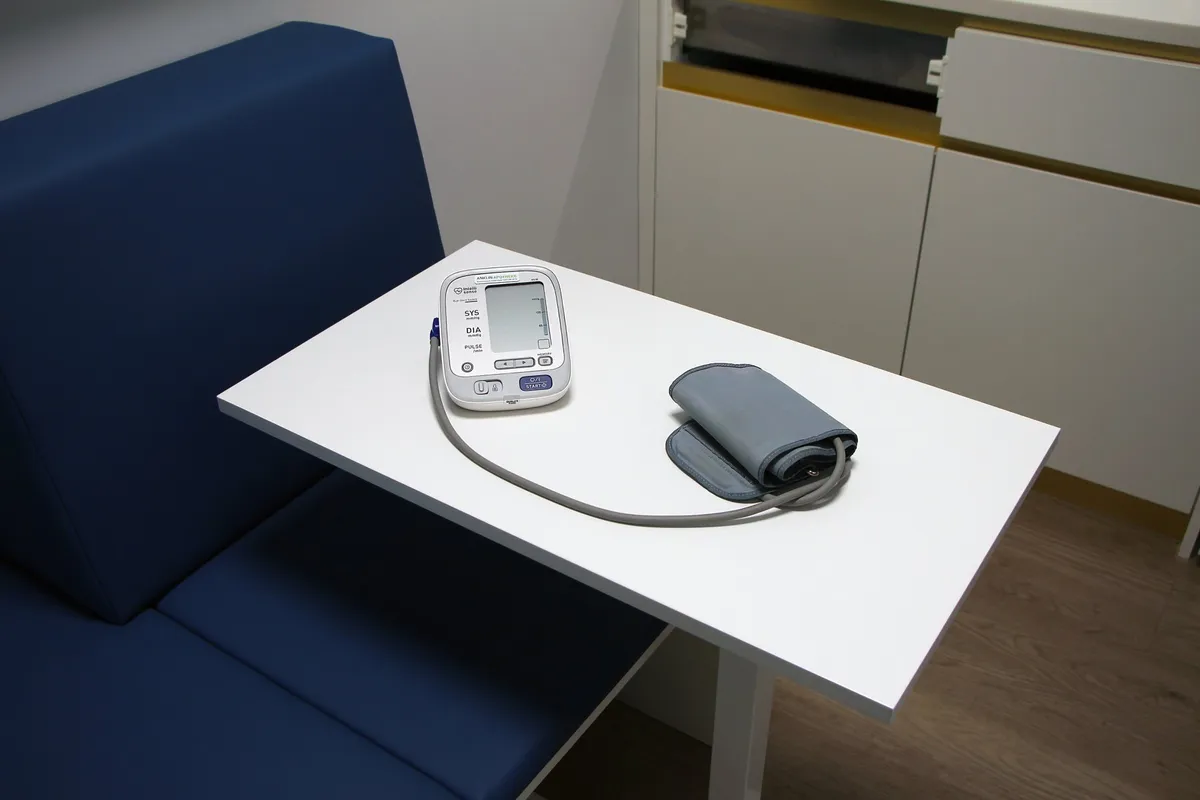
The treacherous thing about high blood pressure is not that it hurts. It is that it does not.
Tamara Ringger · 8 min readFour to six weeks before departure.
Bring your destination, the duration and your medication list, and we will put the rest together.