Sun protection: why SPF 50 alone is not enough.
The factor on the bottle applies to an amount of cream that almost nobody puts on. That is why SPF 50 is rarely SPF 50 in everyday life.
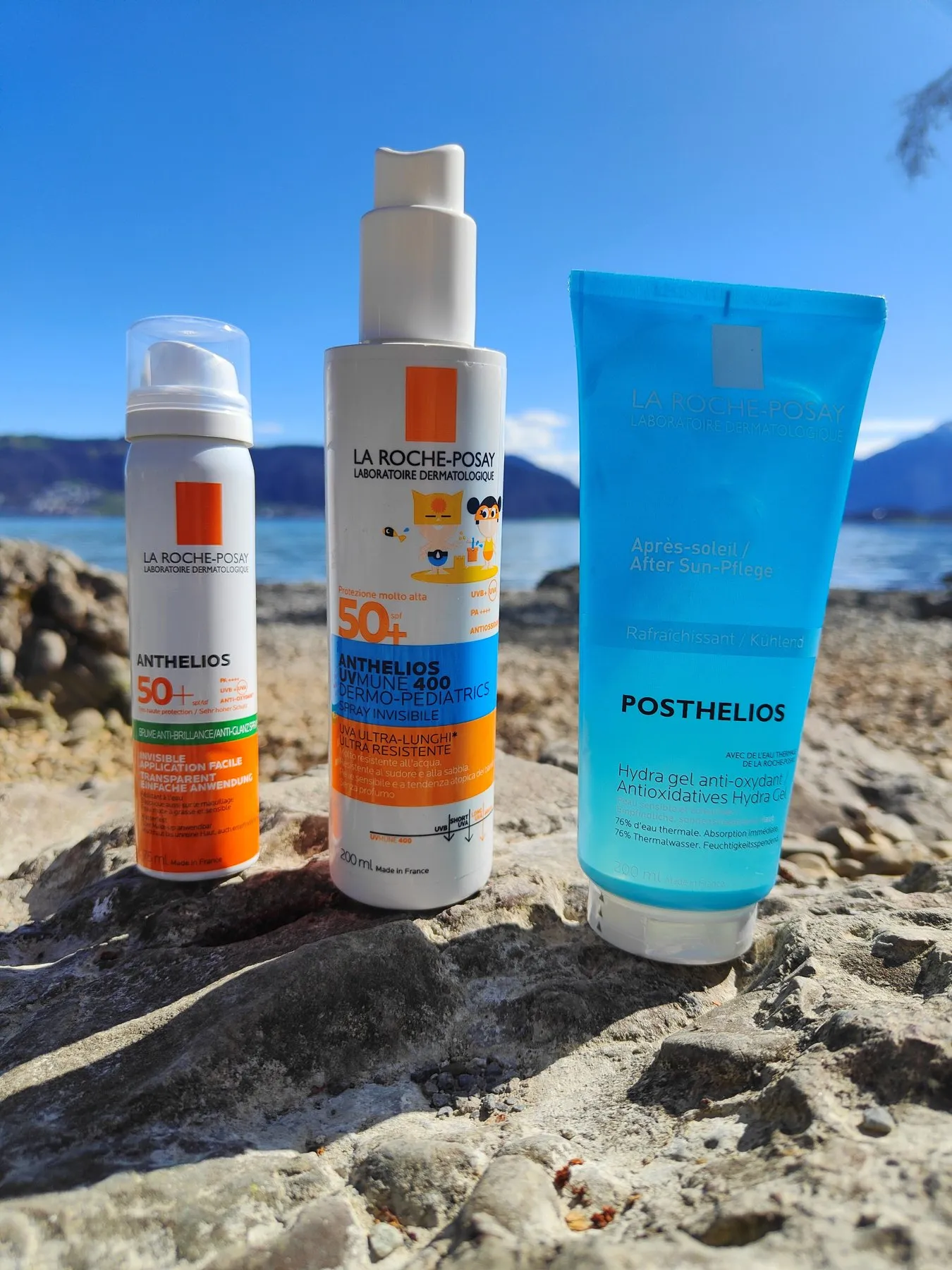
What does the sun protection factor really mean?
The sun protection factor is determined in the laboratory under precisely defined conditions: with two milligrams of cream per square centimetre of skin. That sounds abstract, but it is the decisive point.
Converted to an adult body, that is around 30 to 40 millilitres per application, about a filled shot glass. For the face and neck alone, about half a teaspoon.
In practice, a quarter to a half of that gets applied; that is the usual finding. And the protection does not fall proportionally but considerably more steeply. Anyone applying SPF 50 too thinly is often in the range of a medium factor in everyday use.
The practical consequence is unspectacular but effective: do not raise the factor, raise the amount. A generously applied SPF 30 cream protects better than a sparingly spread SPF 50. Which texture you will really apply every day is best found out by trying: we will give you a sample of our own brand.
Worth knowing
A 200 millilitre tube, used correctly, lasts one person about five to six whole-body applications. If your sun cream from last summer is still half full, it was too little.
Why UVA counts just as much as UVB
The sun protection factor describes only the protection against UVB radiation, that is against what causes sunburn.
UVA rays penetrate deeper. They cause no acute sunburn but contribute to skin ageing and damage the genetic material of skin cells. They also pass through window glass and are present more evenly across the day than UVB.
So look for the UVA symbol: a circled “UVA” on the packaging. It means that the UVA protection corresponds to at least a third of the stated sun protection factor. A product without this symbol can have a high factor and still be weak on the UVA side.
Which medicines make skin sensitive to light?
This is the point at which a pharmacy can contribute something that is written on no cream packaging.
A number of medicines make the skin considerably more sensitive to sunlight. Those affected then get a rash or sunburn from sun exposure that they cannot explain. Well-known groups include certain antibiotics, some diuretics, various anti-rheumatic drugs, some antidepressants and St John’s wort preparations.
Externally applied products play a part too, for instance some acne treatments and active ingredients from the vitamin A group in care products.
If you are taking a new medicine and suddenly react differently to the sun in summer, that is neither coincidence nor imagination. Bring your medication list along and we will check in two minutes. That is the same look we take in the pharmacist consultation.
From the counter
St John’s wort preparations and acne treatments make the skin sensitive to light. It is in the package insert and is still rarely read.
How to apply it properly
- Apply before getting dressed, not on the beach. In a swimsuit you miss the edges, and those are the bits that burn.
- Twenty to thirty minutes before going out, so that the film settles.
- Reapply every two hours, and always after swimming and after towelling off.
- The forgotten spots: ears, the back of the neck, the tops of the feet, the backs of the hands, lips with a UV stick, and with thinning hair the parting.
- “Water resistant” does not mean waterproof. The term means that part of the protection remains after two twenty-minute swims. After that, reapplying is due.
Reapplying does not, incidentally, extend the protection time. It restores the protection lost through sweating, rubbing and water. Anyone applying SPF 50 in the morning and reapplying at two o’clock does not have twice as long a protection.
What cream cannot do
Sun protection products are the last link in the chain, not the first.
Shade between eleven and three does more than any product. Clothing protects more reliably than cream, because it does not slip and does not rub off; densely woven fabrics protect better than loose ones. A hat with a wide brim for face, ears and neck. Sunglasses with UV protection, because the eyes and the thin skin of the eyelids are affected too.
For infants under one year the rule is: no direct sun at all. At that age shade and clothing are the way, not sun cream. Which preparations are suitable for children’s skin we discuss in the advice for children and families.
And a sentence that is needed every year: even under a covered sky a considerable part of the UV radiation gets through. The worst sunburn often happens on a cloudy day in a boat or in the mountains, because nobody feels at risk. Water, sand and snow reflect on top of that.
Important
Moles that change in size, shape or colour, or that itch or bleed, belong in medical hands. We advise on sun protection, but assessing changes in the skin is a matter for dermatology.
From the counter
When someone comes in with a half-full bottle from last summer, that is the answer to the question of why they got sunburnt anyway. A family needs two to three bottles on a summer holiday, not one.
As of July 2026. Determination of the sun protection factor according to the ISO standard with 2 mg/cm²; UVA labelling according to EU recommendation 2006/647/EC.
Managing director and qualified pharmacy technician, with further training in biochemistry according to Dr Schuessler and the Bach flower training of the Bach Centre. A training supervisor and examination expert – anyone who wants to do their apprenticeship with us is guided by her.
Professionally reviewed by our qualified pharmacists. This article does not replace a medical diagnosis.
Frequently asked questions about sun protection
Is last year's sun cream still good?
If it was stored properly and the shelf-life symbol allows it, yes. If it spent the winter in the car, has separated or smells different, no. And if it is still almost full, the amount you used last year was too small.
Is SPF 30 or SPF 50 better?
SPF 30 filters around 97 per cent of UVB radiation, SPF 50 around 98. The difference is smaller than the difference between applying it thinly and applying it generously. For sensitive skin, children and the mountains, take 50 anyway.
Do I need sun protection in winter?
In the mountains yes, absolutely. Altitude and reflection off snow increase the exposure considerably. In the lowlands a day cream with light UV protection for the face is enough for most people in winter.
Does sun cream prevent vitamin D formation?
In everyday life this plays a minor role, because hardly anyone applies cream without gaps. If you are worried, your vitamin D status can be measured rather than going without protection for it.
What is the difference between mineral and chemical filters?
Mineral filters sit on the skin and work immediately, but tend to leave a whitish film. Chemical filters absorb in and need a little lead time. For sensitive skin and for children, mineral filters are often preferred. Both protect, as long as there is enough of it on the skin.

Electrolyte powder, a medication list with the names of the active ingredients, and four weeks' lead time for vaccinations. Three things missing from most travel kits.
Tamara Ringger · 7 min read
The canton of Zug is one of the TBE risk areas of Switzerland. What that means for trips into nature, and how to protect yourself.
Tamara Ringger · 6 min read
Sunday evening, seven boxes on the kitchen table, and with the small white tablet the question of whether it has already been taken today.
Tamara Ringger · 7 min readIs your skin suddenly reacting differently to the sun?
Bring your medication list along and we will check in two minutes.